Will I see Brutus or Dominator on Jumping Crocodile Cruises? I get asked that every week from travellers chasing the thrill of the Top End. I get it — there’s nothing like watching a saltwater crocodile explode from a wildlife-rich river, jaws open wide enough to swallow a chicken quarter in one snap. As a long-time tour guide who’s spent half his life roaming the river ecosystem of the NT, I can tell you this: whether it’s Brutus, Dominator, or one of their equally cranky mates, you’re stepping into the hunting grounds of Australia’s most formidable ancient reptiles.
Contents
- 1 A River Where Legends Still Rule
- 2 Why Saltwater Crocodiles Leap Like Birds
- 3 Spotting Crocs – The Best Time to Do it
- 4 Staying Croc-Wise: Safety Before Selfies
- 5 Country, Culture, and Coexistence
- 6 The Ethics Behind the Jump
- 7 What You’ll Experience On Board
- 8 What To Bring Along
- 9 Croc Conservation: A Northern Success Story
- 10 So, Will You See Brutus or Dominator?
- 11 Final Takeaway: Let Nature Call the Shots
- 12 FAQ
A River Where Legends Still Rule
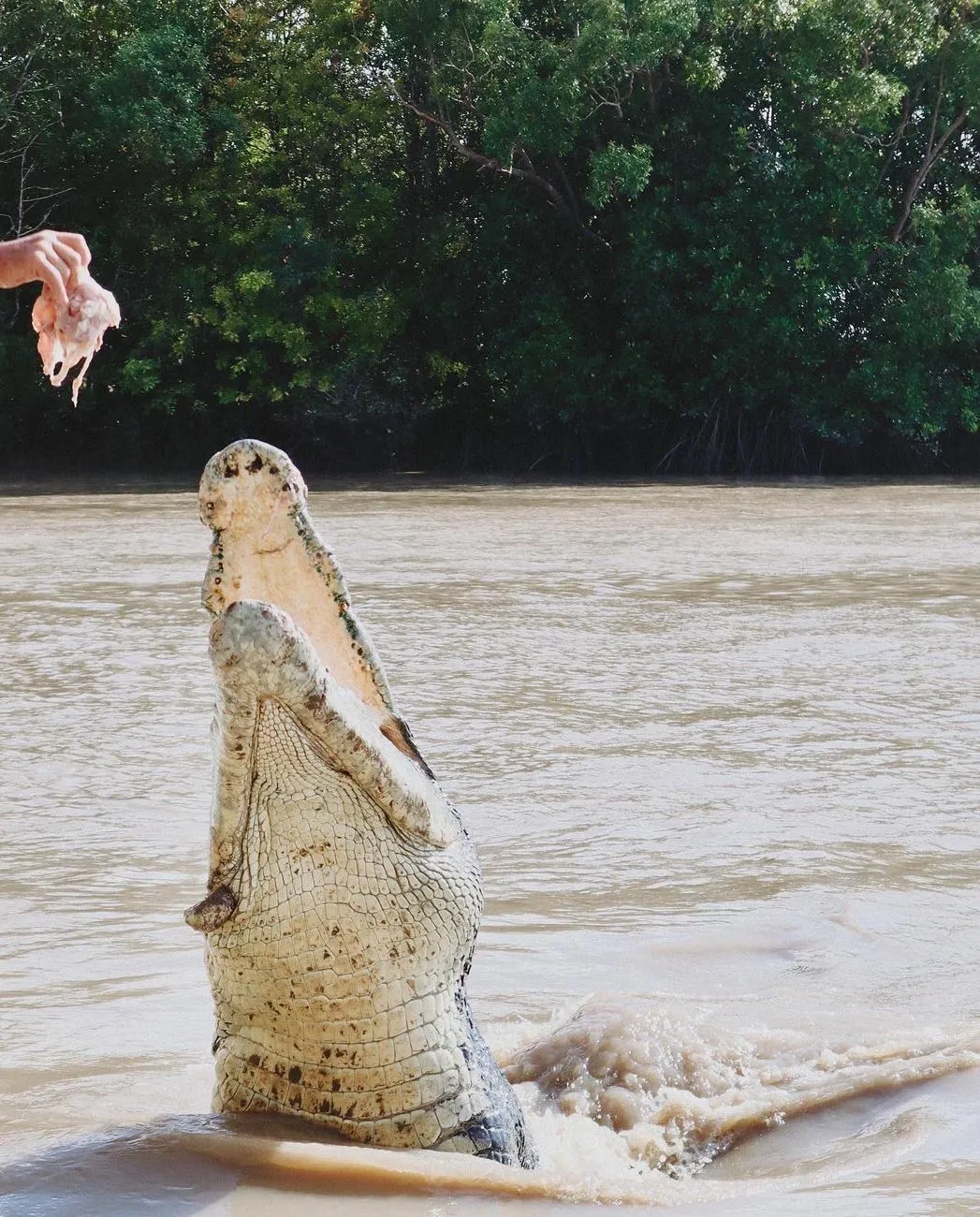
An hour’s drive from Darwin, the Adelaide River winds through the Northern Territory’s scenic escarpment country — mangroves, pandanus, and muddy banks where the air hums with insects and the occasional wallaby rustle. This stretch is the heartland of the Jumping Crocodile Cruise, home turf for both Brutus and Dominator.
The NT’s Department of Environment estimates there are over 100,000 saltwater crocodiles spread across the Top End, with as many as ten per kilometre in the prime reaches of the Adelaide. It’s a wild population that’s grown from near extinction in the 1970s to one of the most successful conservation stories in the world. Every boat tour here offers a window into that revival — and maybe a close-up look at the alpha male himself.
Brutus: The Old King With Battle Scars
Brutus is the croc everyone whispers about before the cruise even leaves the dock. He’s the grizzled veteran — roughly 5.6 metres long, missing a front leg (rumour has it he lost it to a bull shark), and still commands the river like a general. I’ve seen him glide through the current with the slow confidence of a creature that knows every twist of this river ecosystem.
He’s often spotted during the dry season, basking near the banks where the water’s shallow and warm. On a good Jumping Crocodile Cruise, you’ll see him rise lazily from the depths, jaws parting to take a bite of meat before sinking back with barely a ripple — the very definition of calm power.
Dominator: The Challenger From Downstream
A few bends downriver lives Dominator, the younger, hungrier rival who’s spent years testing Brutus’s boundaries. He’s longer — about 5.8 metres — and just as intimidating. I’ve watched the two face off in their overlapping hunting grounds, each a living relic of the dinosaur age. If Brutus is all patience and control, Dominator is raw muscle and attitude.
It’s not every day you see both on one cruise, but when you do, it’s unforgettable. On one trip I led a few seasons ago, both surfaced within fifty metres of each other — the wild animals circling like boxers sizing up a rematch. That’s the kind of wildlife experience no games & puzzles app could ever replicate.
Why Saltwater Crocodiles Leap Like Birds
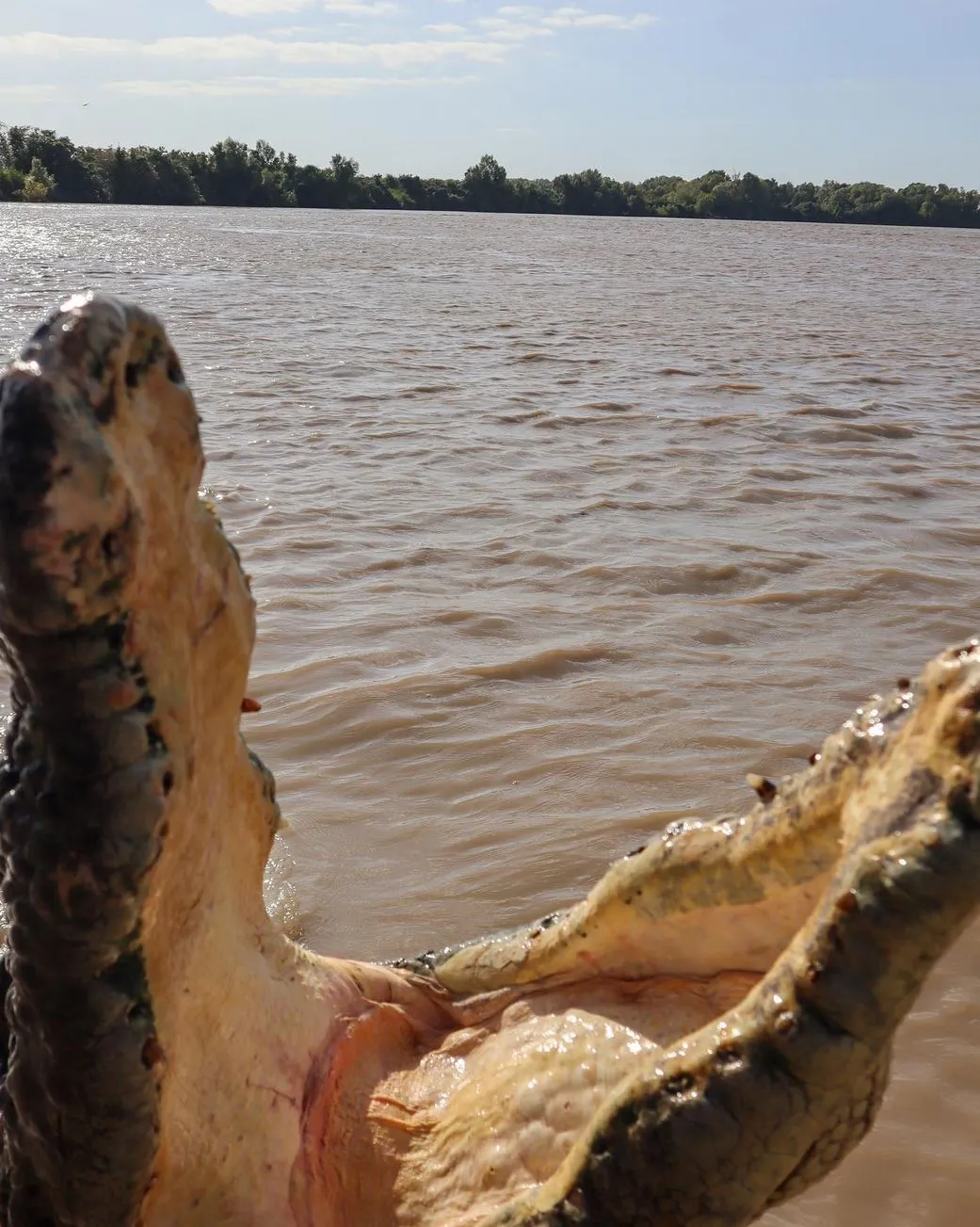
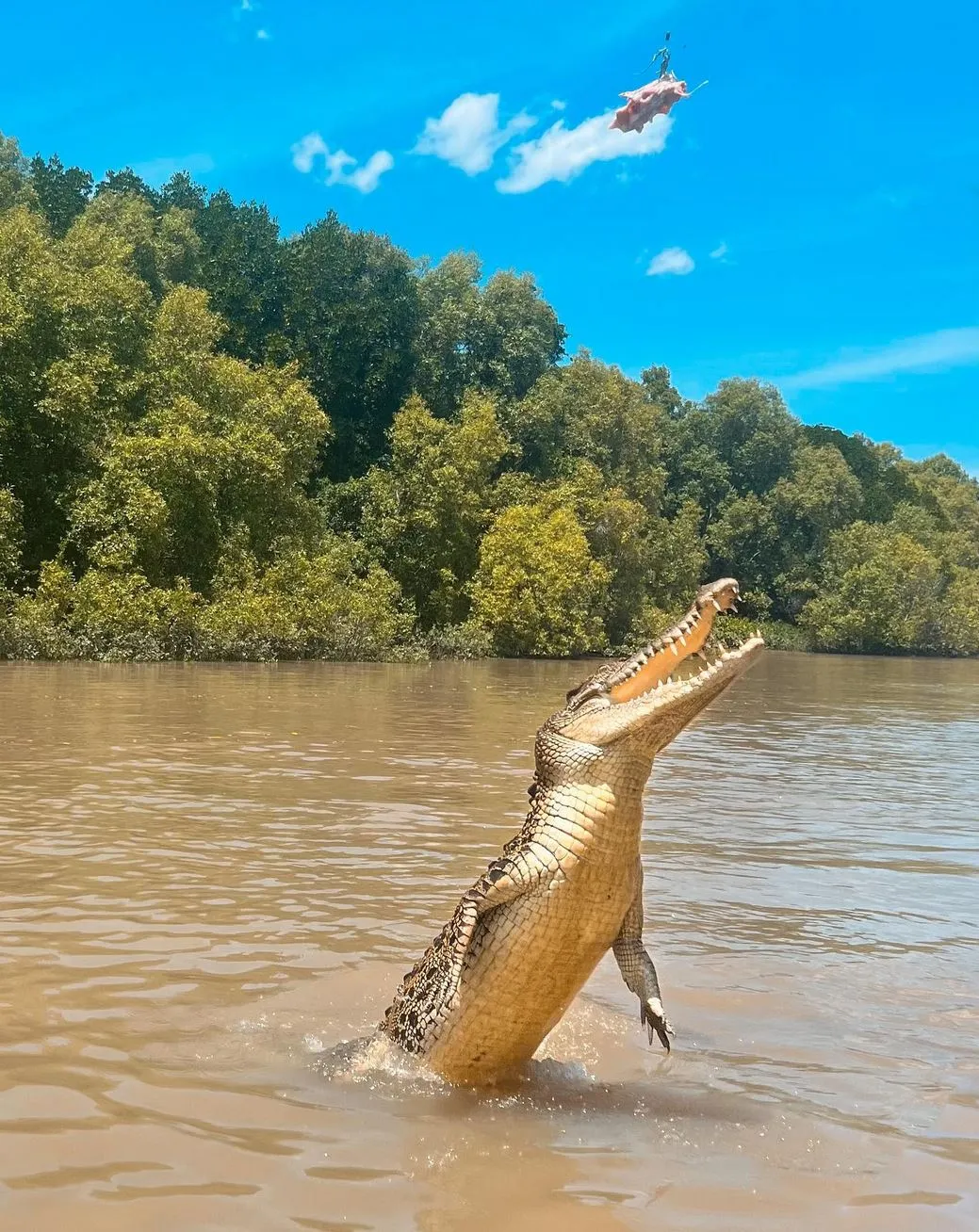
The name “Jumping Crocodile Cruise” isn’t marketing hype – though it sounds like it might be. It’s actually the real deal. These old salties can lift themselves entirely clear out of the water – with ease. It’s a trick they’ve been perfecting with their jumping crocodile behaviour. And just for good measure, they even use it to snatch flying foxes, water birds and – if the stars align – even the occasional wallaby who dares get a bit too close to the edge of an overhanging branch.
The first time anyone really started to pay attention was back in the 1980s – a time before smartphones had even become a thing, and news sites weren’t plastering wild animal videos all over the internet. Early guides had a few tricks up their sleeves – and one of them was basically just hanging a bit of beef over a buffalo or a chicken leg or two just above the waterline and then waiting to see what would happen. And wouldn’t you know it – the crocs would just leap right out of the water for a bit of a show off – not to entertain the good people or anything like that, but just because they can (and actually it’s pretty impressive). The modern operators have things a bit more figured out these days – keeping things as ethical as they can, with only the odd feeding session, no mucking about with the animals and close supervision from NT Parks.
| Cruise Operator | Departure Point | Duration | Approx. Cost | Best Chance To See Brutus/Dominator |
|---|---|---|---|---|
| Adelaide River Queen | Arnhem Hwy, Wak Wak Rd | 1 hour | $55 – $60 | Excellent — Brutus’s home stretch |
| Spectacular Jumping Crocodile Cruise | 65 km from Darwin | 1 hour | $45 – $55 | Good — covers both croc territories |
| Crocodylus Park Tours | Darwin pickup | Half-day | $120 + | Moderate — focus on education |
Prices are current as of 2025 but could change with lock-in contracts or seasonal fluctuations in a heartbeat.
Spotting Crocs – The Best Time to Do it
The Top End pretty much runs to two different rhythms – the wet season (which is Nov to April) and the dry season (May to October). During the wet season, the river goes wild and floods over its banks, and the crocs scatter into the backwaters, making them a tough nut to crack for sightings. But come the dry, the river goes down and the big ones start coming back to the same old favourite spots – just perfect for those cruise boat operators and snappy photographers.
Prices are current as of 2025 but could change with lock-in contracts or seasonal fluctuations.
| Season | Conditions | Croc Activity | Ideal For |
|---|---|---|---|
| Wet (Nov–Apr) | Humid, heavy rain, risky roads | Crocs dispersed, nesting season | Adventurous travellers |
| Dry (May–Oct) | Cooler, clear skies, steady water levels | High, predictable | Families, seniors using mobility aids |
If you want consistency, go mid-dry — July and August deliver blue skies, fewer mozzies, and crocs that practically queue for attention.
Staying Croc-Wise: Safety Before Selfies
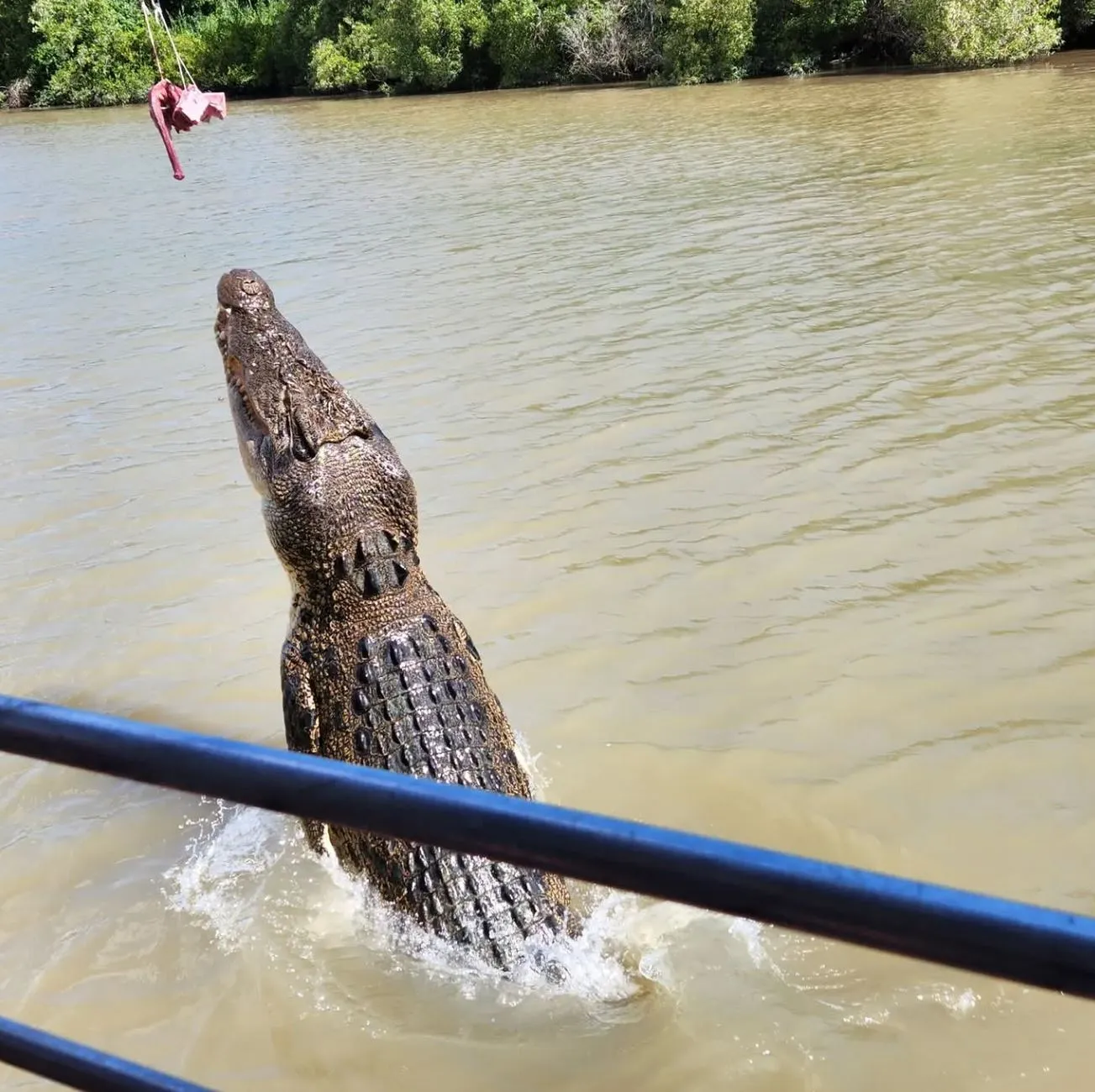
Crocodiles may look slow, but they can lunge at 30 km/h in the water. That’s why every Jumping Crocodile Cruise follows NT Marine Safety rules to the letter. Boats are enclosed, and all viewing is done at a safe distance. Outside of that, you’ll need to use your common sense.
Paul’s Croc-Wise Checklist
- Never swim in rivers or billabongs unless clearly marked safe.
- Keep small group sizes when exploring; fewer distractions, safer travel.
- Pitch camp at least 50 metres from any water source.
- Dispose of scraps far from the river — crocs associate smells with food.
- Check with language guides or locals about current conditions.
Remember: in croc country, you’re the guest. The saltwater crocodiles own the postcode.
Country, Culture, and Coexistence
The Adelaide River region is Larrakia and Limilngan-Wulna country, where these people have lived and shared the land and water with crocodiles for thousands of years. These are not just predators — they’re ancestral beings tied to local culture and Dreaming Law. When we travel here, we walk on sacred ground, and that’s something I always remind guests.
Many of the tour guides on the Jumping Crocodile Cruise are from Traditional Owner families. They bring stories about how female crocodiles guard nests, how seasons signal nesting and hatching, and how humans and crocs have always coexisted along this wildlife-rich river. You won’t find that in any app or website itinerary.
The Ethics Behind the Jump
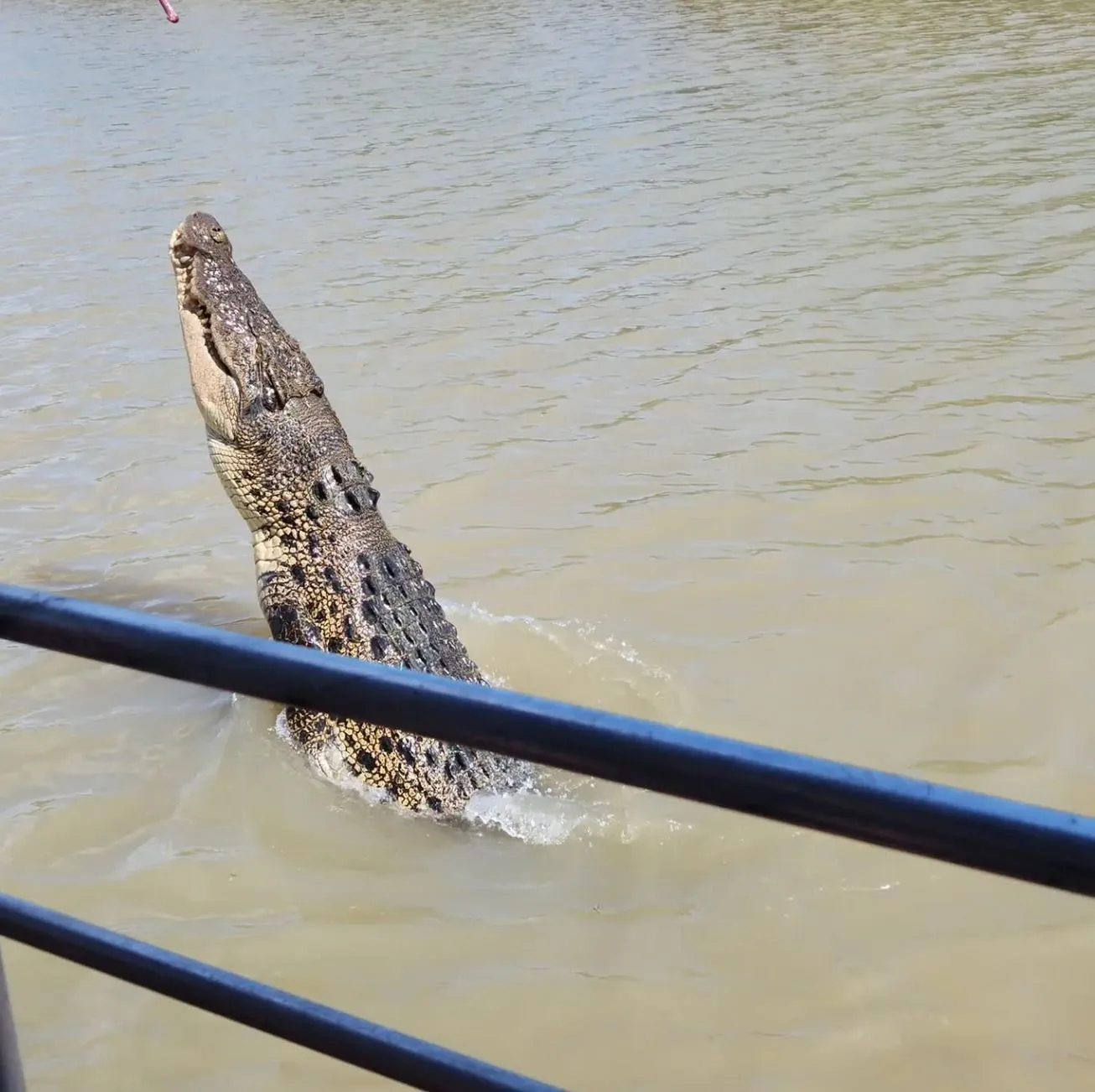
Are jumping crocodiles exploited? Not here. The NT government licenses each operator and limits feeding times to keep the crocs’ instincts sharp. Crocs aren’t trained; they’re just following natural jumping crocodile behaviour. The education value outweighs the minimal impact — in fact, public understanding of croc safety has improved dramatically since these tours began.
Independent studies by Charles Darwin University show these regulated tours reduce illegal feeding and improve community attitudes towards croc conservation. It’s a model for responsible wildlife tourism that could teach other regions a thing or two.
What You’ll Experience On Board
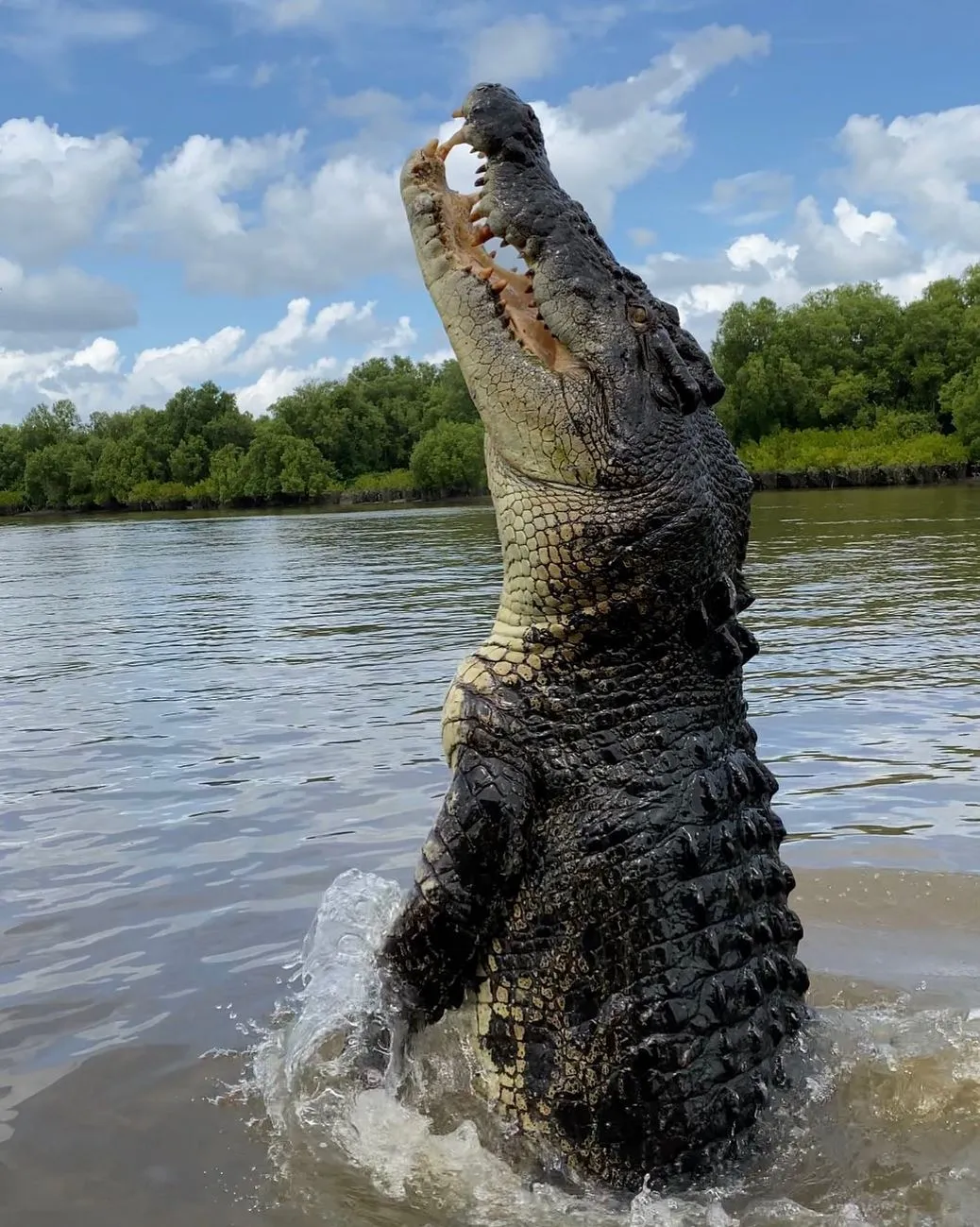
Each boat tour is about an hour long. You’ll hear the engine idle, the guide’s chat over the speaker and then that hush as everyone spots the first ripple. Moments later, an eye breaks the surface, and the croc starts to rise. The guide will dangle the bait (often a chicken quarter) and suddenly a two-tonne reptile will rocket up, water exploding in all directions.
Guides will explain how alpha male crocs defend their hunting grounds, how female crocodiles build mounded nests from mud and vegetation and how the dry season concentrates prey. You’ll leave with a real sense of the river ecosystem and its delicate balance between predator and environment.
What To Bring Along
You don’t need to pack for an expedition, but a few essentials make the experience smoother:
- Hat, sunnies and long sleeve shirt — the glare is fierce.
- Insect repellent — mozzies love mangrove country.
- Refillable water bottle — dehydration sneaks up fast.
- Camera with zoom lens — drones are banned.
- Lightweight trip building tools like a map or travel app — handy for linking this stop with Kakadu or Litchfield.
If you’re on a Get Lost Travel Group Top End trip, we plan our cruises to avoid the big buses. Fewer people, more conversation and better visibility — that’s how wildlife should be experienced.
Croc Conservation: A Northern Success Story
In the 1960s, uncontrolled hunting nearly wiped out NT crocs. By 1971, there were only a few thousand left. Thanks to strict protection and smart management, there are now over 100,000 saltwater crocodiles in the Top End — a true comeback.
Egg-harvesting programs fund conservation and create local jobs. Croc farming is worth over $100 million a year and ensures the wild population stays stable. It’s proof that with good science and community partnerships, ancient reptiles and humans can share a future — even if we’d rather they stay on their side of the river.
So, Will You See Brutus or Dominator?
That depends on the tides, the season and a bit of luck. I’ve been on Jumping Crocodile Cruise trips where Brutus has surfaced like a submarine beside the boat, his scarred hide glistening in the sun. Other days, Dominator has been the star, leaping up in a perfect vertical jump that left everyone speechless.
Either way, you’ll be face to face with power older than time — proof the Top End still belongs to the wild.
Final Takeaway: Let Nature Call the Shots
No two cruises are ever the same. That’s the beauty of it. You’re not watching a show; you’re witnessing life and death in real time. Whether Brutus steals the show or Dominator makes a cameo, the Jumping Crocodile Cruise guarantees one thing — you’ll leave with a new respect for these prehistoric kings.
If you’re doing a bigger Top End loop, pop into our team at Get Lost Travel Group. We’ll hook you up with your croc encounter and Litchfield’s waterfalls or Kakadu’s rock art — no lock-in contracts, just good advice and fair dinkum Aussie know-how.
FAQ
Are Brutus and Dominator still alive?
Yes. Both crocs are still going strong. Brutus might be getting on in years, but he’s still the alpha male of his patch.
Do crocodiles really jump that high?
Yes. They do — up to two-thirds of their body length. It’s real jumping crocodile behaviour, not a trick.
Is it safe for families or older travellers?
Yes. Boats are enclosed and wheelchair accessible; most operators have ramps or mobility aids.
What’s the best time for photography?
Dry season morning is the best time.
Do the tours harm the crocs or the environment?
No. Feeding is minimal and regulated, and helps with education about the river and croc safety.